Evidence
Built on clinical science. Shown, not claimed.
The research, the people and the funding behind Veyra, with anything early marked as early.
Backed by
 Innovate UKFunded by UKRI
 BAC accreditedShort course provider
Research foundations
Three ideas from clinical research.
Thinking skills shape learning
Attention, memory and executive function sit behind every lesson.
Finding needs early matters
Checking every pupil finds needs a referral can miss, so help can start this term.
The skills can be supported
Cognitive remediation is an established clinical approach: practice, adaptive challenge, feedback, reflection.
The people
The people behind the science.
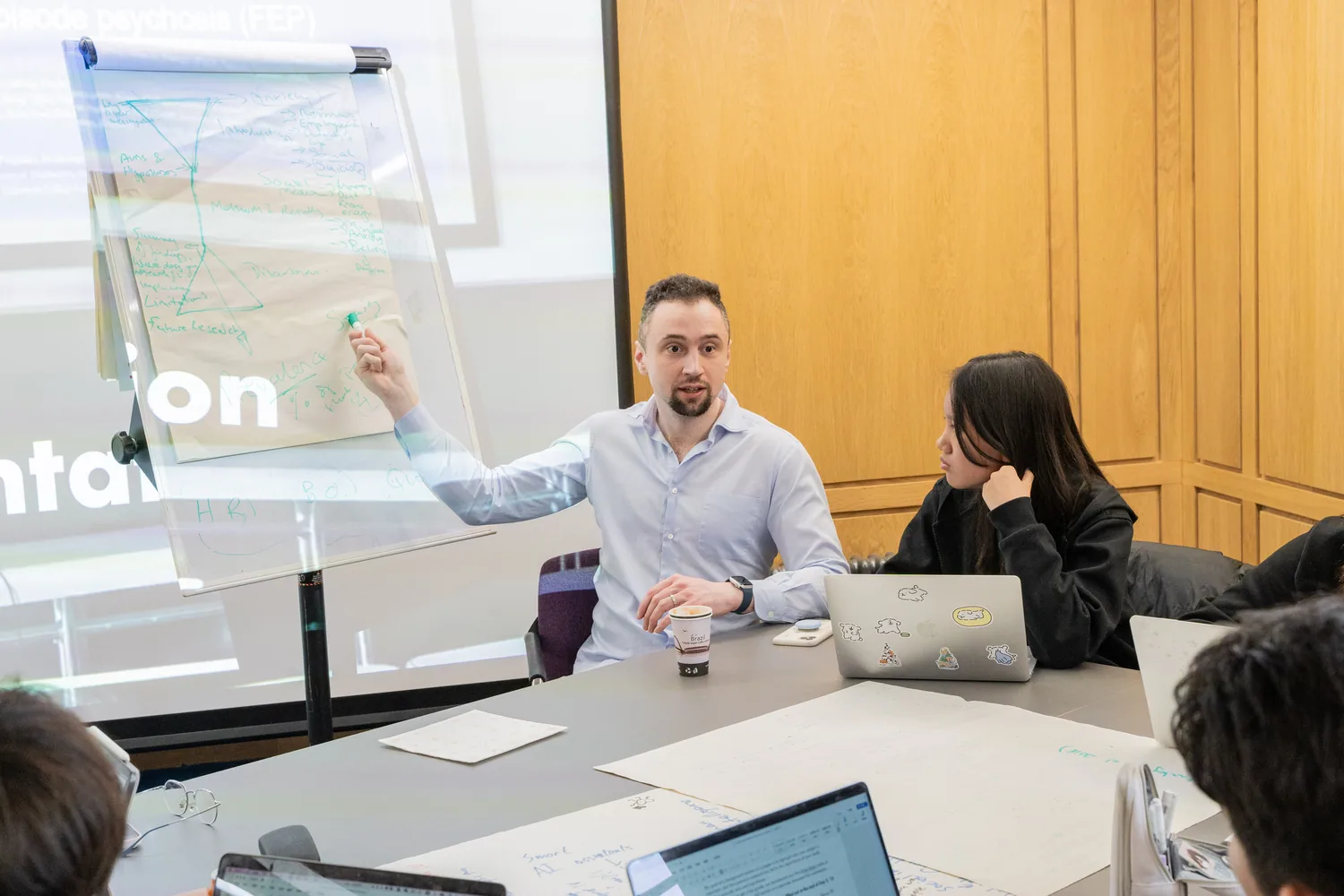
A team with clinical and research backgrounds, working with researchers from King's College London and Imperial College London.
Founder and CEO
Dr Samuel Swidzinski
Published research in cognitive assessment and remediation. A researcher on NIHR-funded cognitive remediation trials. PhD, King's College London.
Research Lead, psychometrics
Dr Brett Raymond-Barker
A psychological researcher in psychometrics and quantitative methods. Oversees how the Mind Skills Check is validated.
Clinical Adviser
Dr Sameer Jauhar
Associate Professor at Imperial College London and a senior NHS clinician. Advises on clinical questions. See the declarations.
How it was built
Made with young people and clinicians.
Co-designed with over 100 young people and with clinicians. Funded by UK Research and Innovation through an Innovate UK Smart Grant.
- Developed with Innovate UK and Bournemouth University
- Selected for Innovate UK growth support
- Validation with schools continues, under independent ethics approval
- Patent pending
Technical summary: reliability, norms, ethics and funding
- Test-retest reliability
- .83 to .88 (on a scale of 0 to 1), n = 146. 146 adolescents took the Skills Check twice, and their results held steady. Psychometric analysis, May 2026.
- Internal consistency
- α .88 to .96 (on a scale of 0 to 1). Same analysis.
- Norms
- National UK norms, from schools in 12 locations representing the demographics of the UK.
- Task design
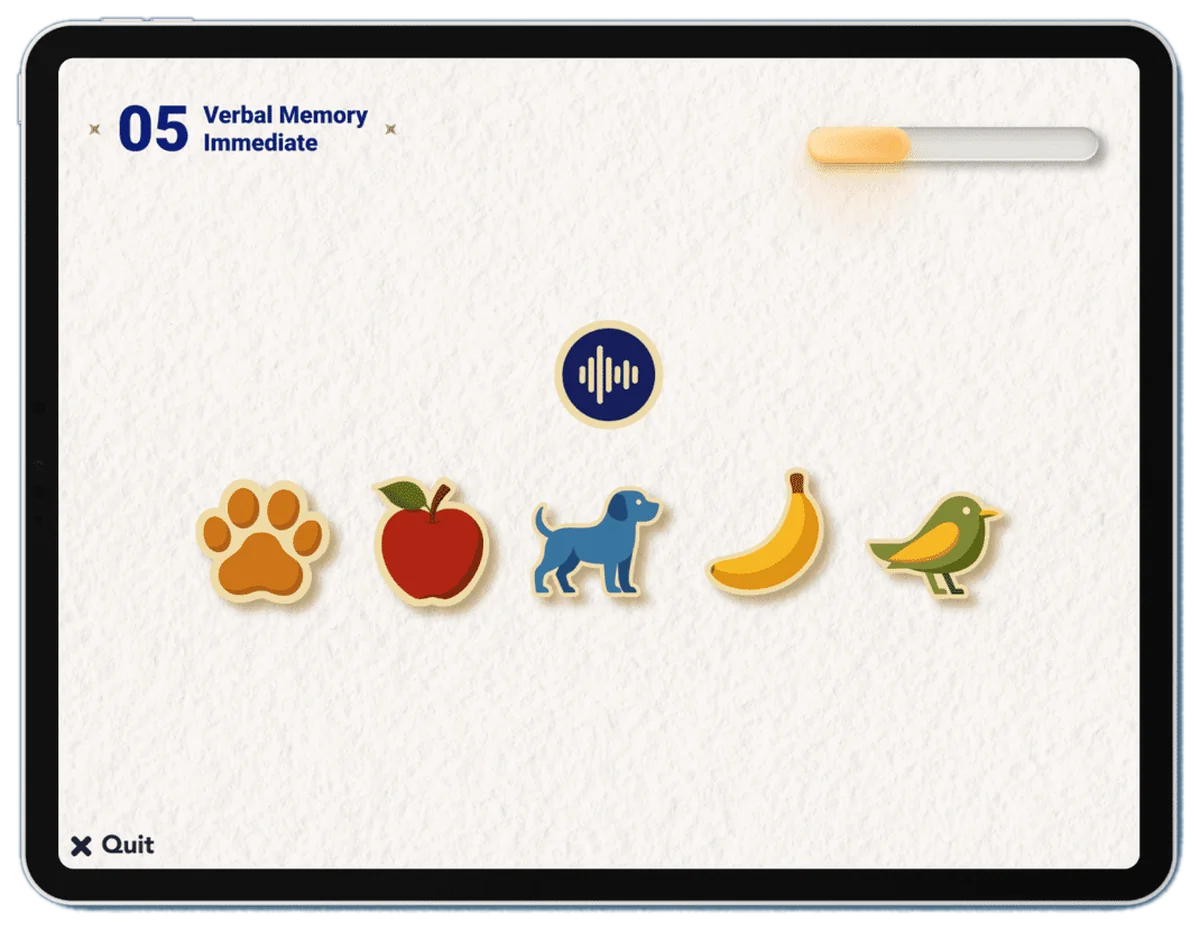
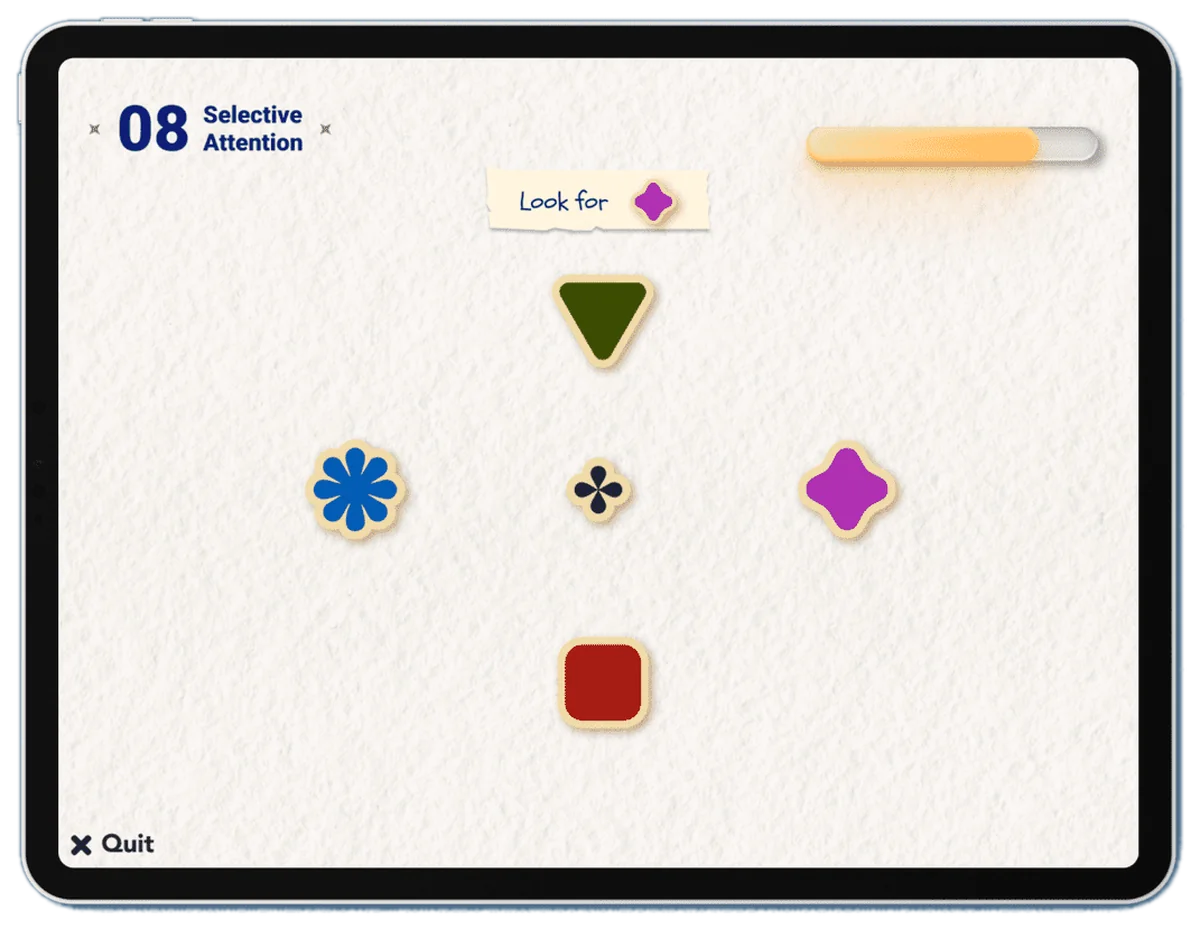
- 12 tasks, one per skill, each modelled on an established clinical test such as the Stroop, the Tower of London, Digit Span or Trail Making. Plus a 30-item wellbeing questionnaire.
- Validation
- Continues with schools, overseen by our Research Lead.
- Ethics approval
- IREC025, Independent Research Ethics Committee, 26 January 2026.
- Training study
- Early and small: 53 pupils, around 10 hours in the training programme, improvement on a recognised measure of day-to-day functioning.
- Funding
- Innovate UK Smart Grant 10155195, £342,701, funded by UK Research and Innovation.
- Patent
- Pending: Luxembourg application LU603192, filed 11 September 2025. Not yet granted.
From our pilots
What happened in two pilot schools.
We name a school only with its permission.
- An independent secondary school in Cambridge ran the Skills Check and used the report to shape its whole-school approach.
- At a state secondary school in Surrey, Year 12 students took part in a co-design session. Several then asked for advice on the areas the check identified, and found it helped.
Early results Early study
Early results from the training programme.
Early studyThe training programme
53pupils
showed improvement on a recognised measure of day-to-day functioning, after around 10 hours in the training programme.
Fairness by design
Measured on the skill, not the background.
- Culture-fair. Colour, shape and pictures, not written words, stories or local knowledge.
- National UK norms, from schools in 12 locations.
- The same for every pupil, so who is flagged does not depend on who is loudest.
- No pass or fail. A tutorial and a practice round come first.
Declarations
What we mean when we say it.
Plain statements of where things stand, so nothing is read as more than it is.
- The NHS
- We are gaining support for NHS adoption through the NHS Innovation Service. We do not currently have a direct pathway into the NHS: the Innovation Service is supporting us to work towards adoption, and that is the plan.
- Imperial College London
- We work with Imperial's brain sciences department on grant applications. We do not currently have a funded project together. We are advised by Dr Sameer Jauhar, Associate Professor at Imperial College London and a senior NHS clinician.
- The universities
- We work with individual researchers at King's College London and Imperial College London, and with Imperial's brain sciences department on grant applications. We have no funded project or institutional partnership with either university.
- The patent
- Veyra is patent pending. We filed the application (Luxembourg, LU603192) on 11 September 2025, and it has not yet been granted.
- Diagnosis
- Veyra does not diagnose. It gives schools structured information about how each pupil focuses, thinks and remembers. It does not replace teachers, educational psychologists or clinicians.